Provides near-real-time monitoring of wildfire plumes for emergency services. Supports forestry, insurance, and energy sectors in managing risks and protecting communities.
Challenge
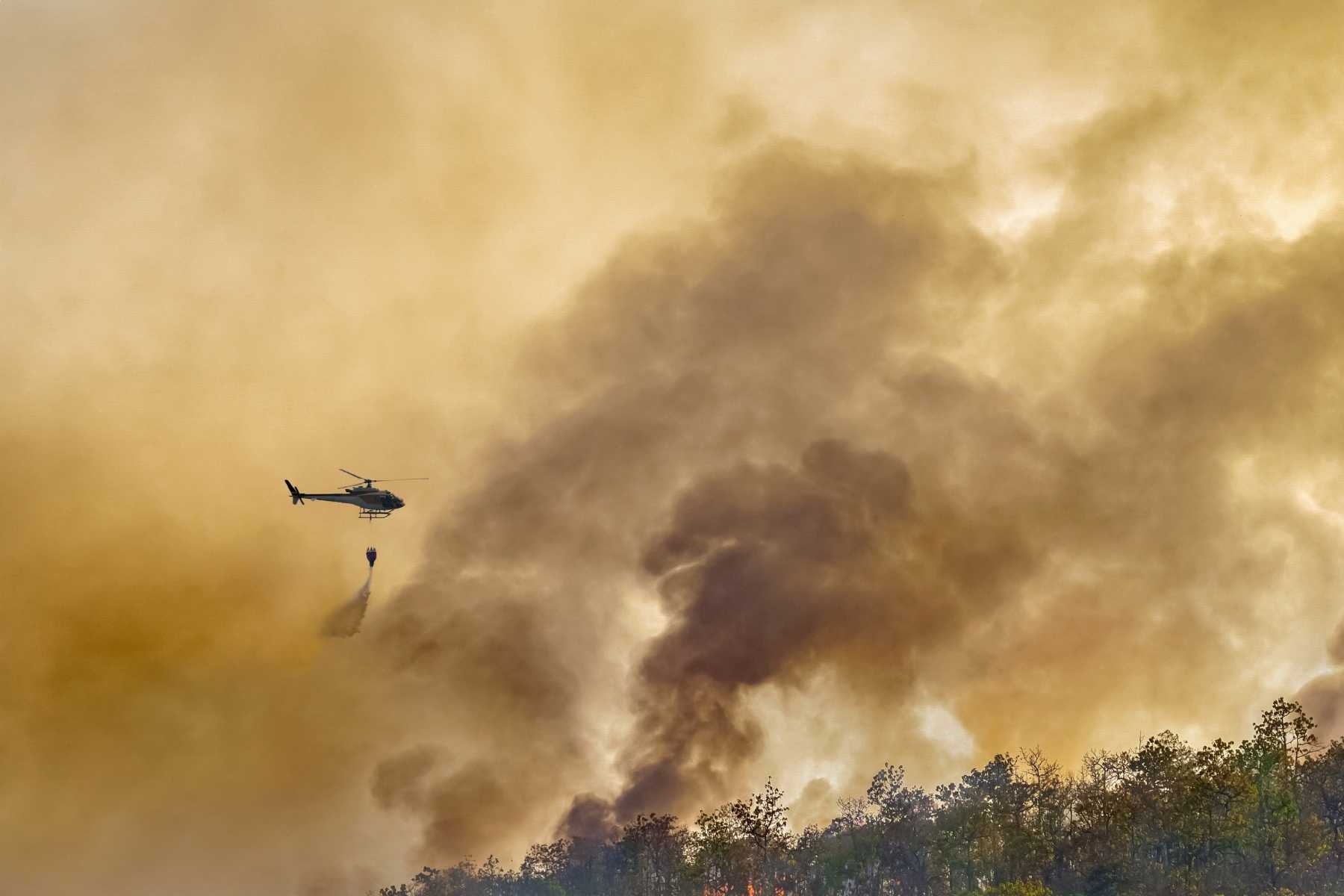
Large, intensive, and long-lasting fires pose direct risks for ecosystems and societies, as well as via air pollution to human health and ecosystems in surrounding areas. Wildfire plumes can travel long distances, transporting gases and aerosols in the troposphere and sometimes depositing to the surface even at thousands of kilometres from the source.
Solution
The wildfire demonstrator will set up a system for alerting the RIs about large forest fires, which triggers Near Real Time (NRT) data provision of specific relevant data from the RIs e.g. CO2, isotopes, and aerosol, on the ground and in the atmospheric column, and from airborne measurements. All data will be compiled and visualised together with atmospheric model (FLEXPART) back trajectories and forecasts, providing a 4-d (time & space) distribution of the wildfire’s emissions.
Outcome
The main outcome of the demonstrators is providing information of wildfires plume distribution in 4-d. The demonstrator outcome will be useful as a diagnostics tool for Copernicus. Finally, this collection of wildfires information will form the scientific basis for the evaluation of the impacts of such events.
Reproducibility
The demonstrator is provided by the RIs (ACTRIS, IAGOS, ICOS). Methods developed in the demonstrator can be applied elsewhere and beyond the project framework.
Wildfire Demo Service
The Wildfire Demo Service provides integrated access to multi-source atmospheric data and modelling tools to analyse and monitor wildfire emissions across Europe.
Key Features
- Integrated Data Access
- 4D Wildfire Plume Analysis
- Historical Wildfire Analysis
- Wildfire Alert & Forecast Tools
- Virtual Research Environment (VRE)