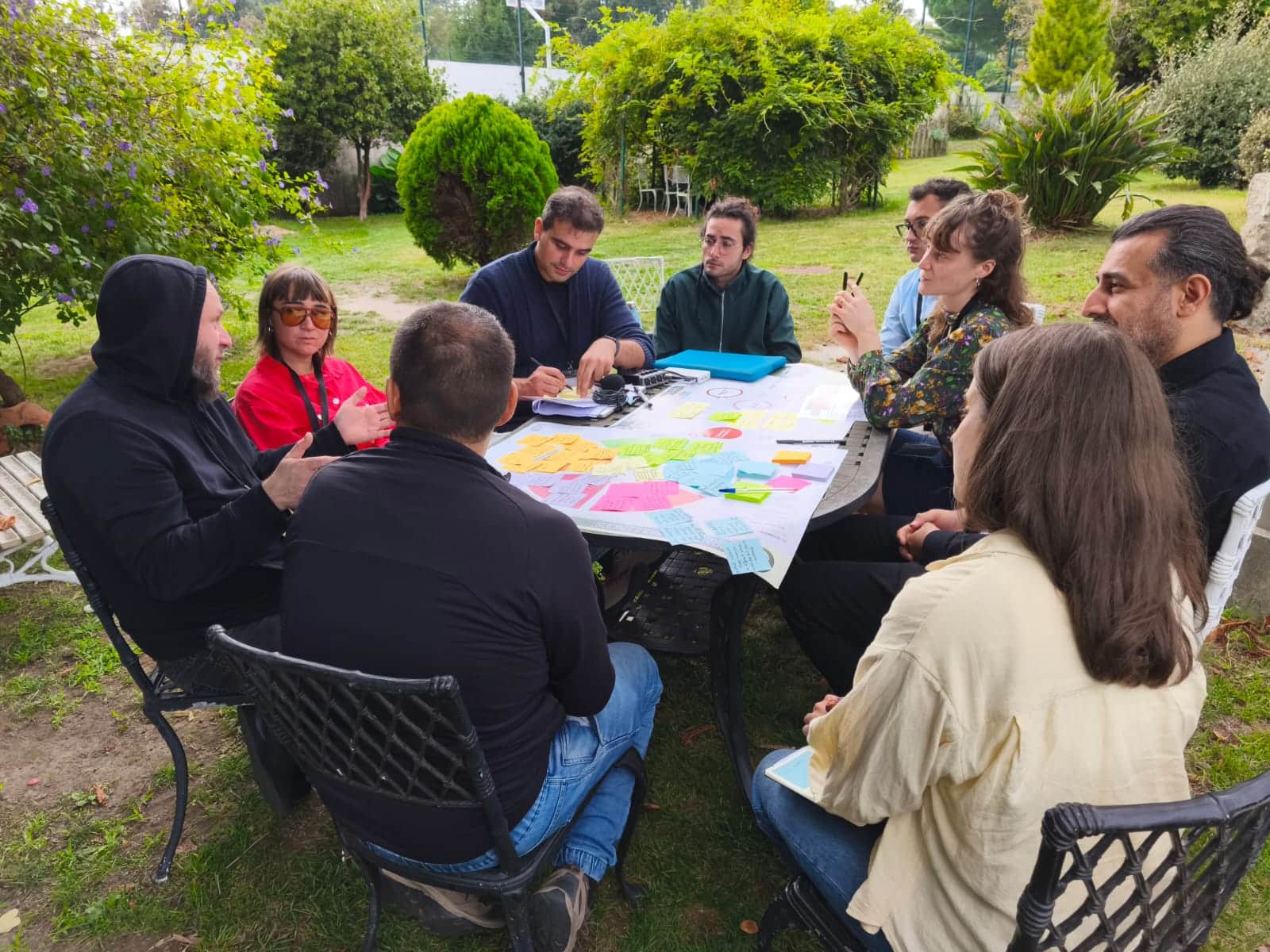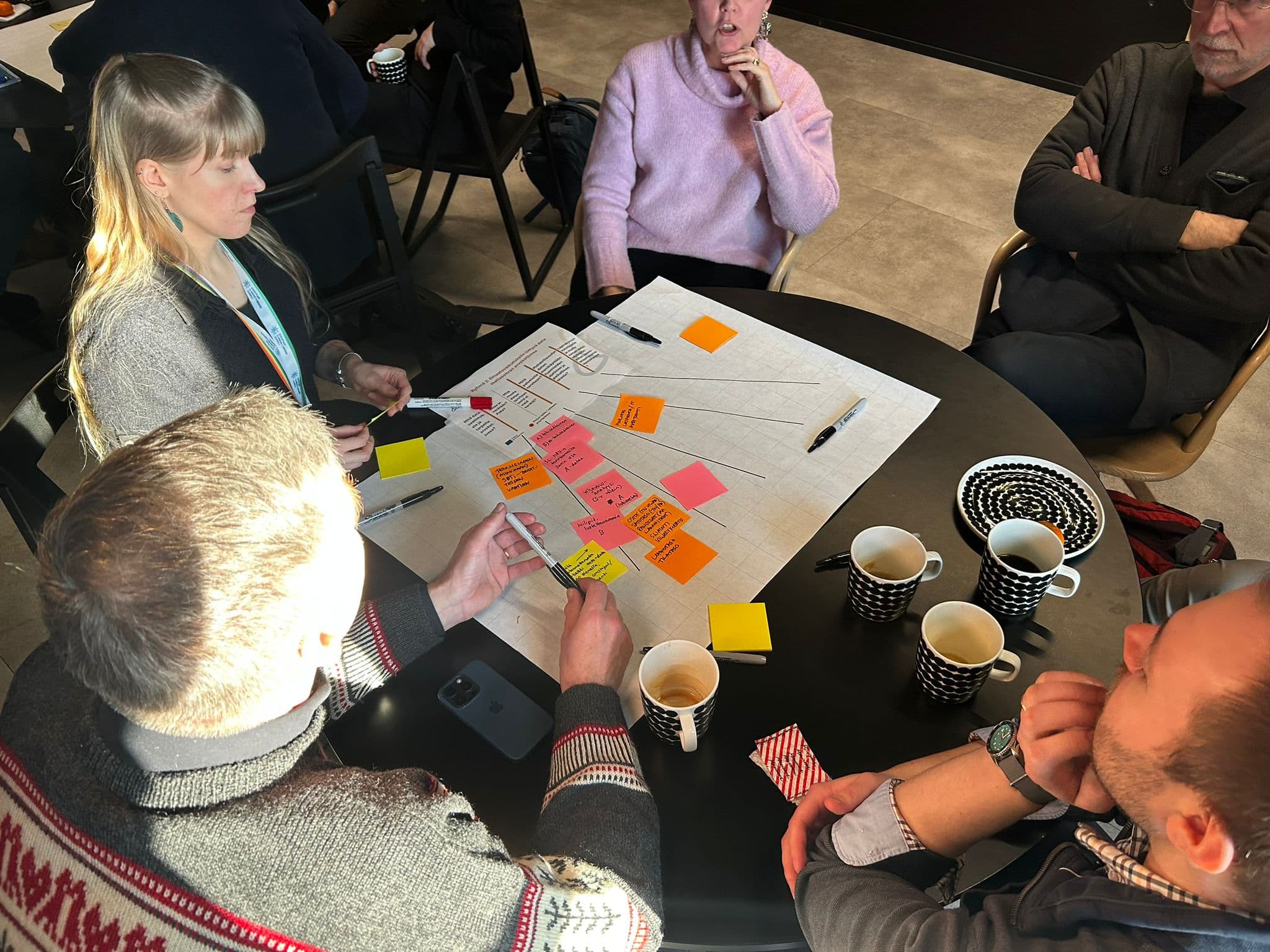
As part of our work in WP2 and WP5, the Soil Carbon Service Design Lab is developing a prototype service for landowners and farmers that leverages Earth Observation (EO) data. This work is carried out in collaboration with the EU-funded project SoilTribes, an initiative that brings together artistic, scientific, and civic perspectives to reimagine soil justice across Europe.
Updated 24/04/2026
SoilSense: Prototyping an Earth Observation–Based Service for Soil and Land Stewardship
by Ville Kasurinen, Mariana Salgado and Elena Saltikoff
In a previous article, we reported on how this challenge was developed during a SoilTribes Bootcamp in Porto, where the project was selected for further development funding (€5,000). That support allowed us to move from concept to implementation. In this article, we present the resulting prototype—now a Minimum Viable Product (MVP)—and reflect on its future potential. Development continued during the Barcelona Bootcamp in March 2026, where we also began using the prototype as a tool to explore longer-term service possibilities.
From Mycellium to SoilSense
There are already several commercial solutions offering Earth Observation (EO)–based services for landowners and farmers, typically providing cultivation recommendations using open-access or commercial satellite products and other, openly available data sources such as weather forecasts. These tools often support short-term planning decisions in agricultural management.
Our service, originally called Mycellium and now renamed SoilSense, started from a different approach. The original aim was to explore if and how Earth Observation data from European Research Infrastructure Consortiums (ERICs) can be used to support longer-term understanding of land use, vegetation development, and soil health. Rather than focusing only on recommendations, SoilSense is designed to make EO data accessible and interpretable, enabling users to learn from historical trends and observable change.
A core objective of the prototype is to demonstrate how satellite data can be used to estimate crop growth and detect plant stress, such as water scarcity. By observing indicators like chlorophyll content and Photosynthetically Active Radiation (PAR), it is possible to estimate carbon uptake by plants—an approach informed by ongoing modelling work (Nevalainen et al 2022, Wijme et al 2024).
What the MVP Does
The service allows users to define an area of interest—for example, an agricultural field—by uploading a GeoJSON polygon, which can be created using tools such as https://geojson.io. Once submitted, the service retrieves and visualizes:
- Vegetation indices such as Normalized Difference Vegetation Index ( NDVI) and Leaf Area Index (LAI) from Copernicus satellite services
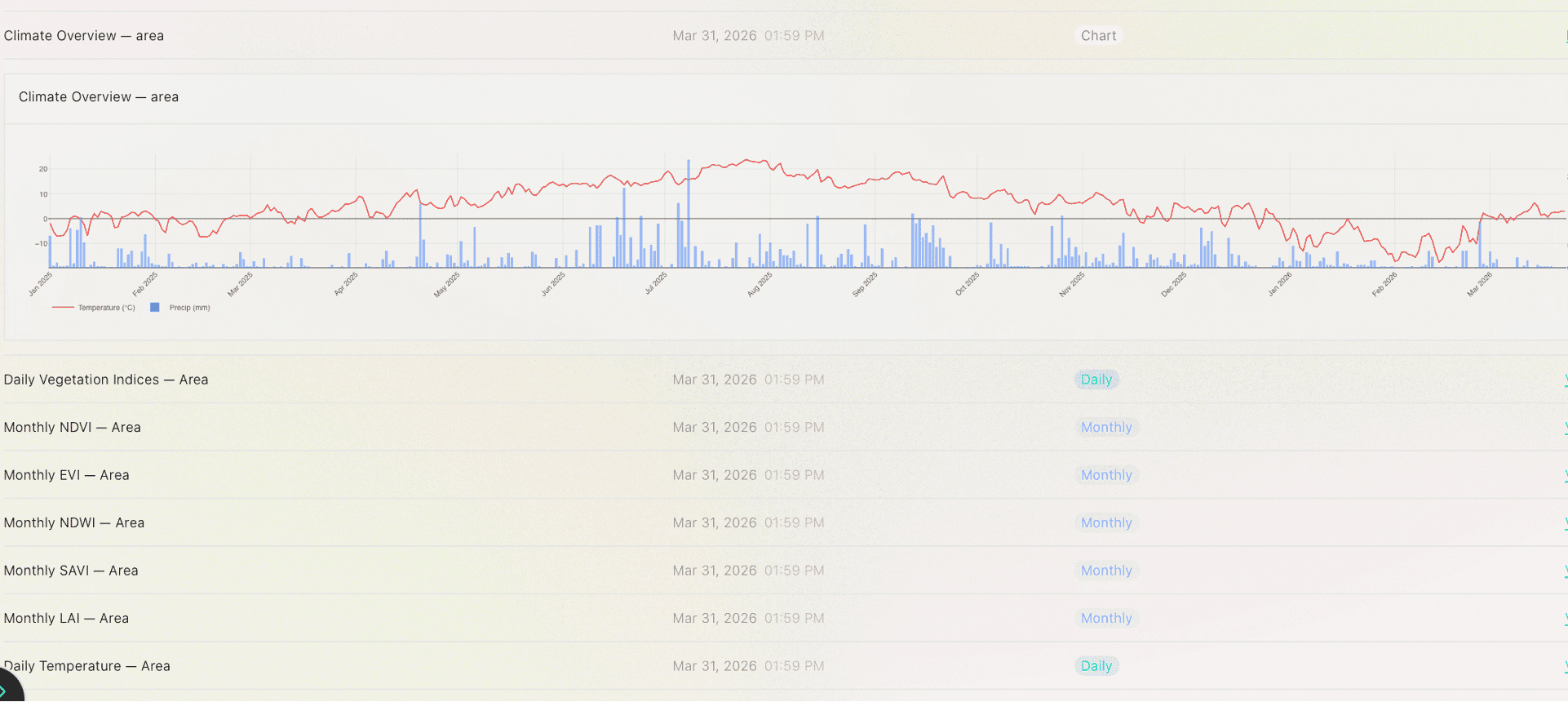
- Meteorological data, including precipitation and air temperature, from the European Centre for Medium-Range Weather Forecasts (ECMWF) data services
This enables users to access historical EO data for a specific location and begin exploring how vegetation has evolved over time.
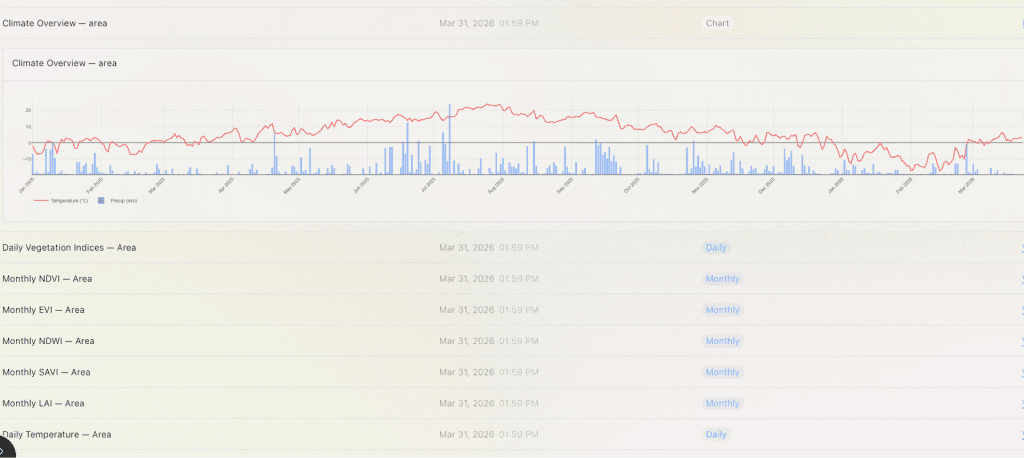
Figure 1. Screenshot of SoilSense showing weather data for a certain plot
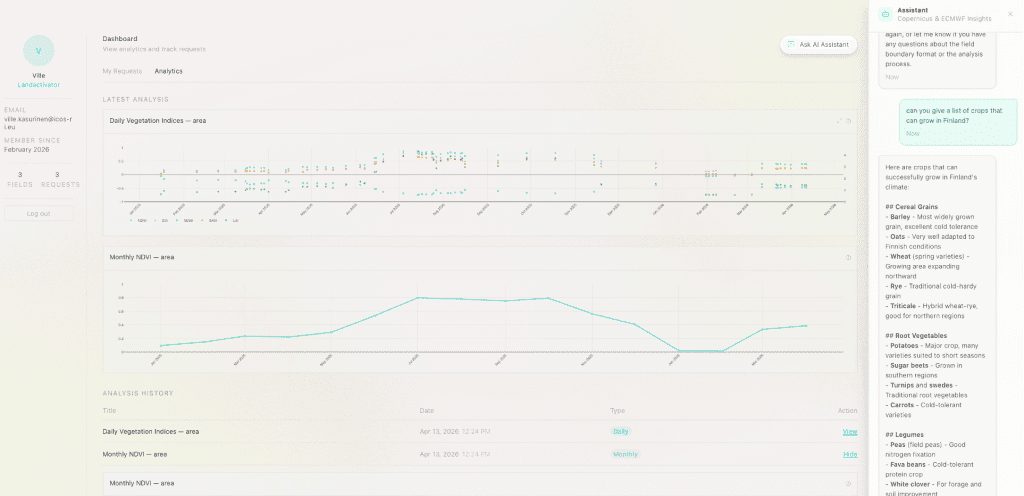
Figure 2. Screenshot from SoilSense showing EO data and the AI assistant based on Claude.
Understanding Change Over Time
The longer-term vision behind SoilSense is to create a service where users can upload a shapefile of a field and immediately access historical insights about that location. Using Sentinel satellite imagery, the service could show how crops have grown in the past and how vegetation patterns change over time.
This is particularly relevant for understanding the impact of new management practices. For example, if a farmer adopts regenerative or soil-friendly methods, improvements in plant growth and vegetation density could become visible in future satellite observations. In this way, SoilSense could support anyone interested in land history, cropping practices, or the relationship between management decisions, vegetation, and soil health—offering a simple way to monitor long-term change, not just short-term performance.
Crucially, the service is intended to be co-developed with farmers and landowners. Testing the prototype with real users allows us to better understand their needs, expectations, and constraints, while also building on insights from previous and ongoing initiatives.
Interaction Through a Chatbot (and Its Limits)
In the MVP, the interaction with the service takes place through a Chatbot interface based on Claude . At this stage, the Chatbot is not trained for deep or site-specific data analysis. It can generate general, high-level recommendations about potential crops growing in selected location, but it does not yet account for key contextual factors such as:
- Soil type
- Management history
- Past crop rotation
These elements could be integrated in later development phases. Importantly, a key design concern is ensuring that the Chatbot does not provide misleading or unsupported recommendations. At the moment we do not see other ways of preventing the bot from hallucinating based on arbitrary findings from the internet than using a closed LLM only allowed to use the databases defined for the application. Clearly communicating uncertainty and data limitations to users is essential for maintaining trust and legitimacy as the service evolves.
Why This Prototype Matters
Beyond its immediate functionality, the SoilSense MVP serves as a demonstration of the value of European Research Infrastructures. It shows how publicly funded Earth Observation data can be transformed into meaningful services that support land-use planning, farming practices, and soil stewardship. Several similar commercial services do exist like OneSoil, xFarm Technologies and Agreena and are used in Europe related farming activities. Also these commercial services have based their service development partly on European RI data like Copernicus and ECMWF products.
SoilSense, it is now a prototype but has the potential to develop in a free and open source service that could better serves the needs of a diverse and growing number of farmers who are interested to see how data from European RIs can be utlised in their fields. As development continues, SoilSense provides both a technical foundation and a learning tool—helping us explore how EO-based services can support more sustainable, transparent, and just approaches to land management.
#SoilTribes #HorizonEU #EUMissions #MissionSoil #IRISCC
Nevalainen, O., Niemitalo, O., Fer, I., Juntunen, A., Mattila, T., Koskela, O., ... & Liski, J. (2021). Towards agricultural soil carbon monitoring, reporting and verification through Field Observatory Network (FiON). Geoscientific Instrumentation, Methods and Data Systems Discussions, 2021, 1-26. https://doi.org/10.5194/gi-11-93-2022
Wijmer, T., Al Bitar, A., Arnaud, L., Fieuzal, R., & Ceschia, E. (2024). AgriCarbon-EO v1. 0.1: large-scale and high-resolution simulation of carbon fluxes by assimilation of Sentinel-2 and Landsat-8 reflectances using a Bayesian approach. Geoscientific Model Development, 17(3), 997-1021. https://doi.org/10.5194/gmd-17-997-2024