Workshop 1: Preparing Finland for the Carbon Removal Certification Framework (CRCF)
The first workshop focused on the implementation of the Carbon Removal and Carbon Farming directive in Finland. Participants discussed key questions such as: What is required to implement CRCF in practice? What interests do Finnish stakeholders hold? What roles could different organisations play? How do we move forward together?
The workshop was opened with introductory presentations of the CRCF, as well as the organizing projects and their key relations to the workshop theme.
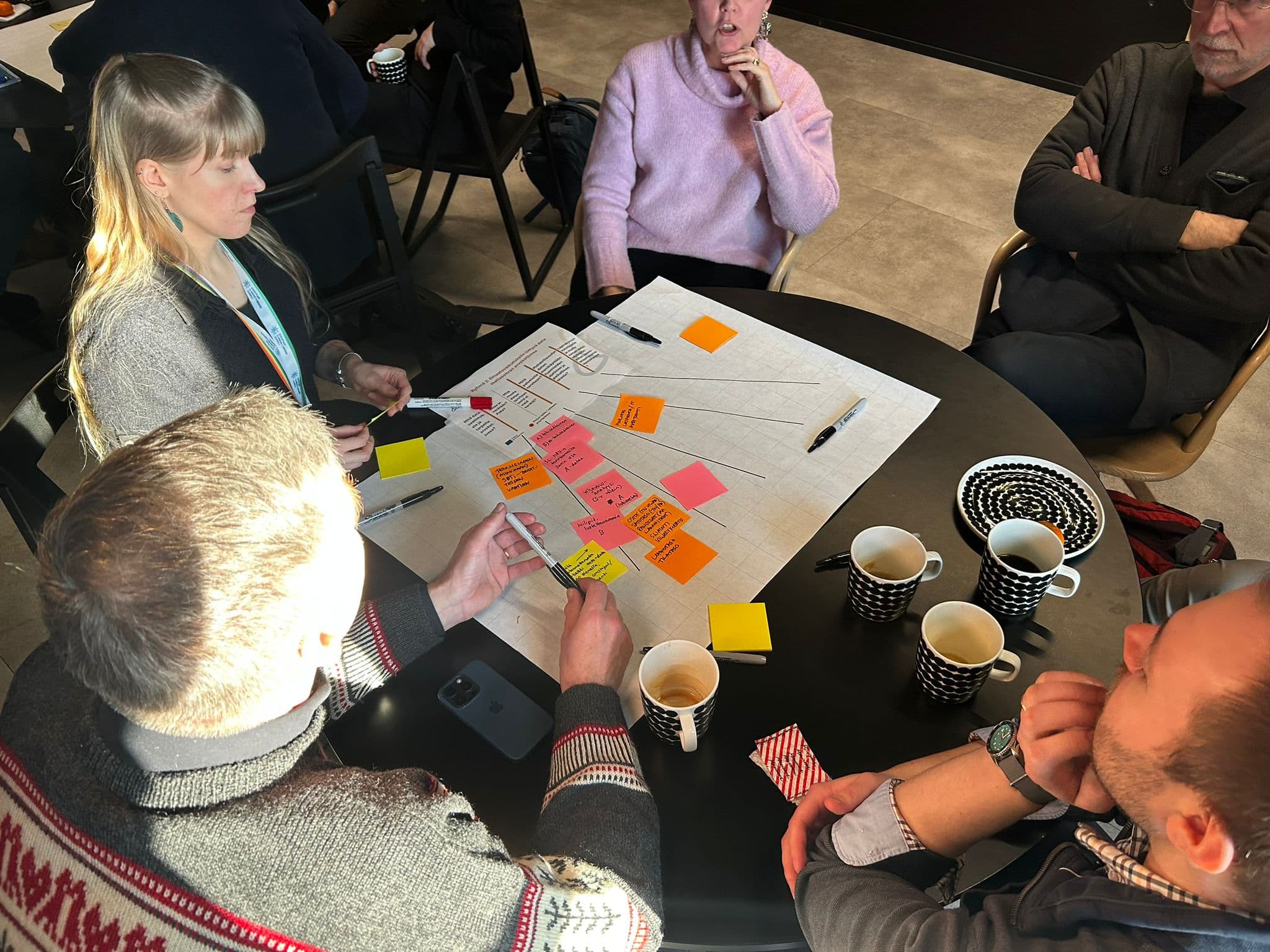
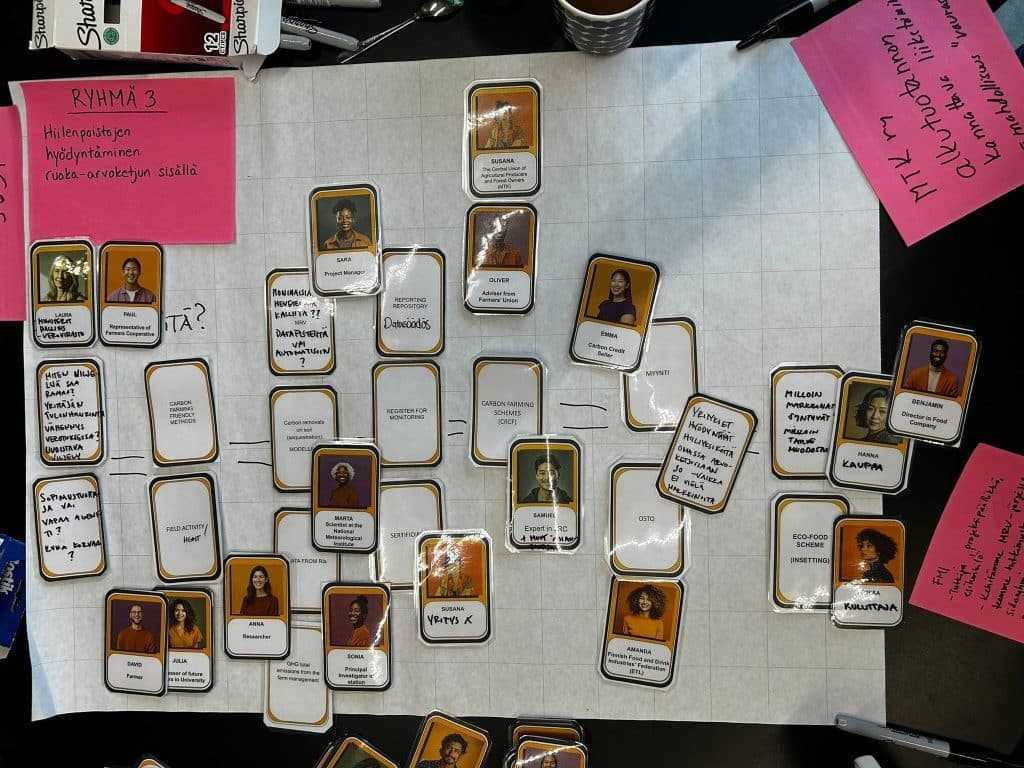
Working in groups, the participants developed proposals for the actions and actors needed for CRCF implementation through three scenarios:
To support the work, we provided cards representing components such as carbon farming methods, field activities, MRV (Monitoring, Reporting and Verification), CRCF schemes, certification processes, and buying/selling mechanisms. Other set of cards represented roles such as Expert in JRC (Joint Research Centre) or Public Agency representative. Participants could also create new cards to complete their scenarios. The exercise sparked lively discussion and highlighted both shared ambitions and areas where additional dialogue is needed.
Across all groups, participants identified that implementing CRCF-compliant carbon farming – especially peatland rewetting – requires a broad ecosystem of new actors, skills and services that do not yet fully exist. Missing capabilities include e.g. specialized planners and contractors for rewetting peat soils, advisory “helpdesk” functions for farmers, certified auditors, consistent monitoring data providers, and entities that farmers can directly contact when interested in producing carbon removals. Discussions highlighted the complexity of the implementation chain, the need for multiple complementary registries, and challenges related to data flows, such as how to track soil carbon changes across crop rotations and ensure that carbon benefits follow raw materials in the food chain.
Participants also examined the dynamics between insetting within food value chains and the potential for an open market for carbon units. While food companies already integrate carbon removals into their internal supply chains, uncertainty remains regarding external demand for agricultural carbon credits – especially given issues like permanence, variability in credit prices, and double-counting risks. The workshop stressed that many important technical questions remain open, including how to account for carbon flows not typically measured (such as lateral carbon movement), how to ensure harmonized and fair data reporting for farmers, and what information should be included in national or EU-level registries. Overall, the session underscored both the promise of carbon farming in Finland and the significant infrastructural, regulatory and data-related gaps that still need to be addressed.
Workshop 2: Understanding the Value of Agricultural Data
The second workshop brought together food-system actors to examine the value of agricultural data: what data is needed, where it currently sits, who can access it, and what incentives farmers have or lack to share information. We also explored the potential benefits of common data interfaces and data spaces, and how added value from data could support the sustainability transition.
We opened the workshop with two keynote presentations. Heikki Aro from the Central Union of Agricultural Producers and Forest Owners (MTK) gave a talk on the shared benefits of a data space for the food system and for farmers. Jari Liski from the Finnish Meteorological Institute presented on carbon sequestration calculations and shared experiences with data transfer practices in Finland.
Participants shared their perspectives on agricultural data needs, highlighting challenges in data flows, regulatory uncertainty, and harmonisation across the value chain. Many emphasised the need for data that supports better on‑farm decision‑making, profitability, and compliance with emerging EU frameworks such as the CRCF. Themes included results‑based subsidies, the role of neutral data intermediaries, fair data governance, carbon‑market readiness, and identifying who creates and captures value in the food system. Across roles ranging from farming, research, administration, industry, and technology, participants agreed that interoperable standards, clear business models, and farmer‑centred data practices are essential for advancing sustainability and innovation in Finnish agriculture.
Group discussion was under three topics:
Using guiding questions, each group mapped opportunities, bottlenecks, and tensions.
The discussions revealed the challenges of Finland's agricultural and public sector data landscape: diverse interests, hesitation around data sharing, heavy administrative responsibilities, and uncertainty about benefits. Yet the conversations also highlighted significant potential – existing datasets, technical and scientific capacity, willing buyers, and farmers ready to invest if economic conditions improve.
Participants examined the role of data in enabling value creation, fair compensation and reliable climate impact reporting within Finnish food and farming systems, particularly in the context of carbon farming and the coming EU CRCF. Participants noted that large amounts of data already exist – from satellite monitoring to farm management records and food industry reporting – but this data is fragmented, siloed and difficult to use across systems. Farmers emphasized that data collection is costly, often duplicated, and does not always produce value for them, while food companies highlighted the challenge of meeting diverse customer reporting requirements and aligning multiple data models. A recurring theme was the need for harmonisation, interoperability, shared standards and “one-time reporting” so that data can flow efficiently across the entire value chain.
The group also discussed how value could be generated from data, how it should be shared fairly and which governance model could support trust between farmers, companies and public authorities. Key issues included data rights, ownership, consent management, competition law risks and the balance between transparency and business confidentiality. Participants reviewed the implications of CRCF, particularly the challenges of avoiding double counting when certified carbon units contribute to national climate targets and cannot therefore be used as corporate offsets. Ultimately, the workshop highlighted that data is emerging as a new strategic asset in the food system, essential for climate reporting, carbon farming, and new business models. However, unlocking this value will require standardised data practices, neutral intermediaries, robust verification structures, and incentives that ensure farmers benefit from sharing their data.
A key proposal that emerged was the idea of forming small, highly motivated groups to conduct real world experiments, rather than attempting broad consensus at once. Participants also stressed the importance of adapting to a fast-changing world. While Finnish farmers have strong structural conditions, such as subsidies, special crops, and new market opportunities, many still operate according to assumptions from the early 2000s. Embracing new crops, new technologies, and new ways of working was seen as essential for moving forward.
Looking Ahead
Overall, the workshops demonstrated both the complexity of these topics and the willingness of stakeholders to continue the discussion. We will document the results in upcoming reports, but this blog offers a short summary of the rich conversations and insights shared. These events underline the importance of collaboration, and the promising possibilities that emerge when people from different sectors come together to rethink the future.